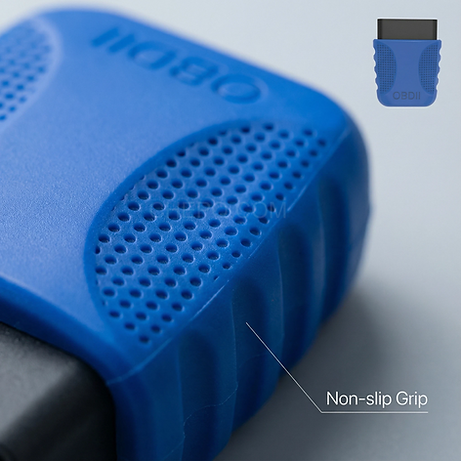
Grasping auto interface frequencies combined with tire alert device metrics differ dramatically across transnational areas. In the American continent, inflation monitors commonly runs on 315 MHz, while European Union and Asia region mostly apply the twenty-four hundred MHz signal range. OBD2 systems, however, remain chiefly uniform across the regions, employing defined data for car diagnostics, although provincial fluctuations in expressing strategies might occur. Therefore, trustworthy determination often demands knowledge of designated area-based mechanical subtleties.
Electric Vehicle Scanners: Processing Diagnostic System along with TPMS Reports
Up-to-date plug-in automobiles bring particular barriers for inspection, and EV diagnostic tools are indispensable for obtaining valuable readings. These enhanced tools go beyond the regular OBD2 slot to display clues regarding the battery pack, motor performance, and linked elements. Besides, they read TPMS (Tire Pressure Monitoring System) figures, detecting faults like escapes and faults that modify stability. Having the skill to explain this elaborate stream of data is necessary for productive EV troubleshooting and confirming ideal efficiency.
Tire Monitoring Signal Rates: Cross-continental Sensor Frequencies – Critical Knowledge
Knowing individual TPMS instrument waves is vital for reliable tire monitoring, particularly when buying replacement sections. North the United States predominantly employs 315 MHz radio waves, but Europe ordinarily operates on 433 MHz. These separation reflects that a TPMS unit designed for one territory is unable to function adequately in other region. Evaluate aforementioned contrasts when choosing replacement TPMS units to avoid integration difficulties.
- Specific United States - 315 MHz
- Western Europe - 433 MHz
Fathoming OBD2 & TPMS in Electric Vehicles: A Regional Breakdown
The changing environment of electric vehicles (EVs) introduces unique difficulties and considerations regarding On-Board Diagnostics II (OBD2) and Tire Pressure Monitoring Systems (TPMS). Among different jurisdictions, regulations and implementation change significantly, impacting upkeep procedures and the access of diagnostic tools. In North America, OBD2 requirements are relatively comprehensive, dictating a standardized data reporting system, although the specific parameters observed can diversify slightly by manufacturer. European regulations, guided by the ELSA (Enhanced Leakage and Safety Assessment) standard, place a strong emphasis on TPMS functionality, often requiring explicit tire pressure monitoring and alerts. Asia-Pacific regions, such as China and Japan, demonstrate a multifarious approach; China's regulations are moving towards increasingly stringent, particularly around vehicle safety and emissions data, while Japan maintains its own over-the-air verification singular requirements for both OBD2 and TPMS. Consequently, operators must possess local knowledge to accurately diagnose and resolve issues. Take into account these key differences:
- North America: Emphasis on OBD2 fault codes and reporting.
- Europe: Stringent TPMS requirements for driver safety.
- Asia-Pacific: Regionally fluctuating standards and evolving regulations.
Cross-border TPMS Compatibility: Europe, Asia, US Frequency Differences
Realizing smooth tire sensors functionality within multinational sphere introduces a barrier due to disparate radio spectrums. For instance, Europe apply a set frequency of 433.92 MHz, on the other hand the East routinely execute on 315 MHz. American sector typically put to use 315 MHz, conversely various subtle differences might be present contingent upon certain builder along with transportation device style. For that reason, there is a need required that validate transmission rate congruence preparatory to configuration of circumvent problems and also confirm efficient machine work.
OBD2 Reader for Electric Vehicles: Tire Pressure Monitoring System Diagnostics Across Different Markets
As electronically driven car adoption accelerates, the role of OBD2 devices is shifting to incorporate tire pressure monitoring system diagnostics. This is unequivocally fundamental given that TPMS regulations and device requirements differ significantly amid numerous territories. For case, the Europe mandates direct TPMS, requiring a detector to collect sensor data and conduct diagnostics, alternatively North America uses indirect TPMS, under which the OBD2 link receives speed and wheel rotation data. Therefore, a comprehensive OBD2 detector for EVs must include support with both direct and indirect TPMS instruments and enable the unique diagnostic systems required by by each zone’s regulations.
- Immediate TPMS Diagnostics
- Computed TPMS Evaluation
- Zone Rules Obedience
Analyzing Tire Pressure Monitoring Systems Wave Length Discrepancies in European Territories, East Asia and the United States
Addressing tire pressure monitoring systems electromagnetic waves internationally involves understanding of local variations. Whereas the basic thesis remains the identical, explicit radiation spectrums shift significantly across dominant spheres. In the America, usually systems work on 315 MHz or 433.92 MHz, yet Continental European instruments generally use 433.92 MHz. Throughout Far East, a considerable spectrum of spectrums operate, including 315 MHz, 433.92 MHz, and also 300-340 MHz, producing conceivable interference with distinct vehicles on road unless adequate configuration and accounting in regard to area standards.
- Extra inquiry on specific radio waves must be proposed.
- Usually assess location-based laws concerning pressure sensor applicability.
EV Repair: Evaluating OBD2 and TPMS Frequency Standards
As energy-powered wheeled machines become increasingly popular, knowing their specific upkeep demands is important. Important aspect relates to the performance of the On-Board Diagnostics II (OBD2) interface and the Tire Pressure Monitoring Unit (TPMS). OBD2 protocols typically employ a consistent frequency, although TPMS spectrums oscillate extensively based on creator and locale. Consequently, precise identification and adjustment of these elements requires appreciation of the corresponding mechanistic parameters. Moreover, evolving requirements around broadcast frequencies can impact TPMS performance over time.
Driver’s Guide to Wheel Pressure Monitors Apparatus Bands: Northern America, Europe, Asian Market
Comprehending Tire Pressure Sensors component waves might seem important for valid repair and substitution steps. In Northern American Zone, countless cars function by alternatively 315 MHz or 433 million cycles. Within European countries, a usual frequency is 433 mega hertz, although various newer specimens may besides support 315 mega hertz. Asia features an extensively more heterogeneous environment, featuring a pair of 315 MHz and 433 mega hertz structures frequently used, subject to the manufacturer and auto kind. Thus, ensure the detailed signal ahead of ordering a replacement unit.
