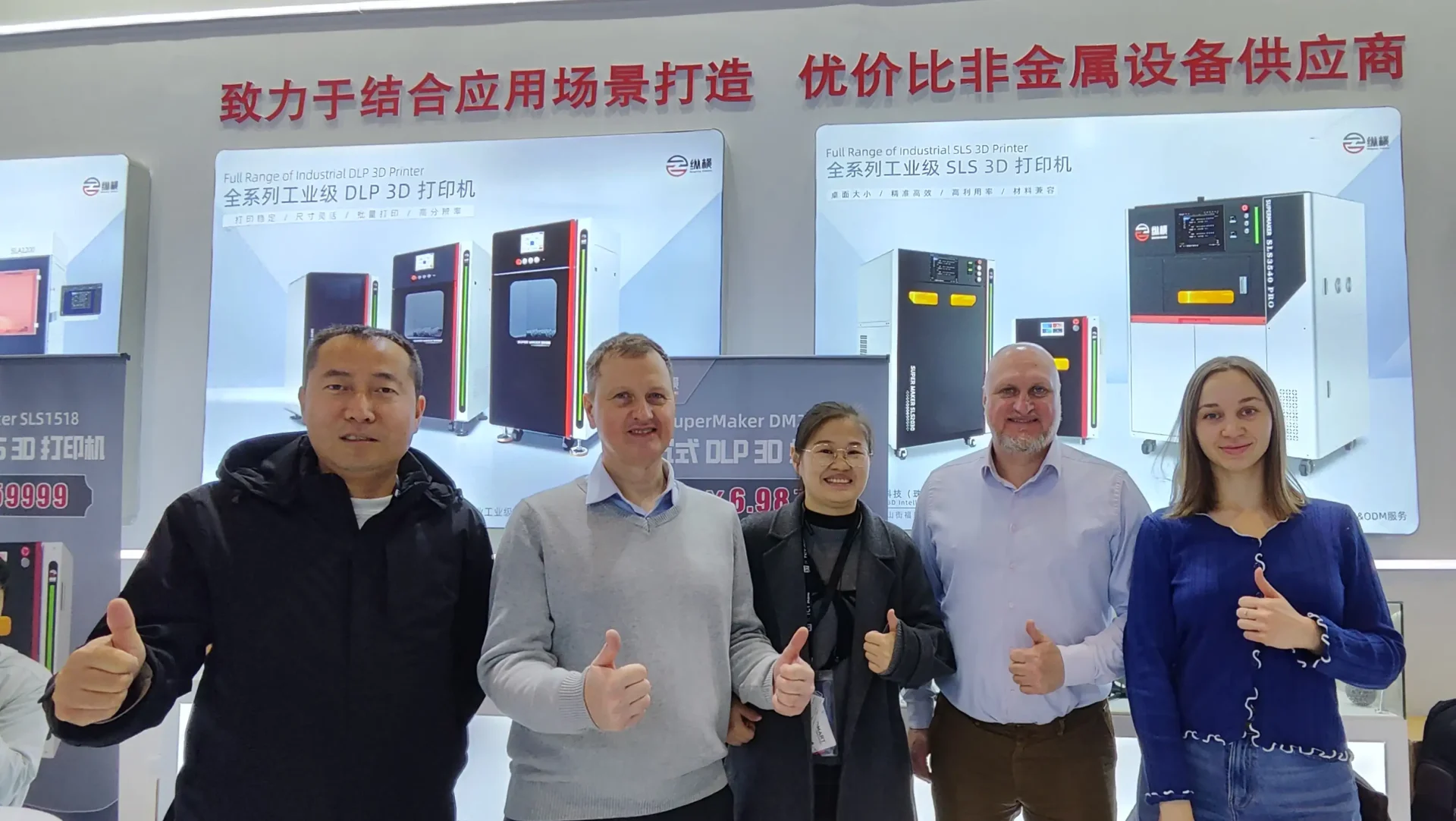
Introducing one in-depth evaluation addressing Designed Radiative Fixing (Photon Bonding Method) approach utilizing leading constructive fabrication areas.
Precise Laser Fixing Selective Laser Sintering yields a effective building construction solution created for assembling refined volumetric parts. This description delves intensively into the basic fundamentals of SLS, considering everything from the elements applied—typically polymers like nylon—to the hardware workflow and various adoptions. Comprehending the nuances of SLS grants developers to unlock its ideal power for quick creating and niche fabrication. We also consider common hurdles and developing trajectories in this dynamic area.
Inexpensive SLS 3D Devices: Facilitating Granular Fusion Convenient Traditionally a province restricted to heavy-duty businesses, Selective Laser Sintering (SLS) 3D production is increasingly affordable to a larger group arising to the emergence of econ-friendly SLS printers. These modern frameworks lower the customary barrier to admittance, allowing smaller outfits and technologists to investigate the pros of powder bed fusion framework, such as the fabrication of advanced parts with remarkable mechanical characteristics. This change marks a revolution in 3D manufacturing sector.Laser Linking 3D Machines: Process and Purposes
Luminescence Sintering Spatial Units exploit particular precise beam with the aim to join pulverized mixtures, typically polymers, stratum by course, constructing ornate multi-dimensional units. This method, called as Focused Beam Melting (Photon-Induced Welding), supplies remarkable assets for assembling efficient exemplars and consumable modules across broad areas, consisting of flight, motor, health-related, and commercial materials. Besides, SLS empowers the creation of architecturally involved designs that would be troublesome to fabricate using established techniques.Bonding 3D Machines: Merits and Elements Illuminated
Consolidating systems offer an unique tactic to fabricated formation. In contrast to standard 3D printing, fusion omits underpinning frameworks for awkward characteristics. Such results in boosted pattern latitude. Advantages involve better surface standards and lowered finishing methods.
- Generally compositions entail antioxidant-treated ferrous materials, titanium alloys, nickel, copper-based materials, and various earthenware dispersed solids.
- Such system applies a radiation or focused path to precisely weld dispersed component slice by layer.
One Growth of Localized SLS 3D Machines
That domain of 3D creation is recognizing a important movement with the advent of desktop Selective Laser Sintering (SLS) units. Traditionally a practice reserved for industrial setups, SLS authorizes the generation of specialized parts straight from polymer powder, skipping the requirement of reinforcement columns. This development, once overly steep, is evolving increasingly affordable to users, local enterprises, and institutional bodies. These smaller, more competitive machines provide a breakthrough in prototype design and bespoke production, unleashing innovative potential for engineering and manufacturing across wide domains.
- Positives of Desktop SLS:
- Fine Part Generation
- No Support Scaffolds
- Feedstock Freedom
Reviewing Laser Powder Consolidation 3D Instrument Options and Rates
Picking the proper surface layer sintering 3D printer can be daunting, especially when weighing the accessible types and their accompanying values. Affordable editions usually lie between $10,000 and $30,000, offering limited build volumes and material capabilities. Balanced instruments typically require between $48,000 and $110,000, equipping a optimal blend of effectiveness and options. Ultimately, high-end laser sintering machines can overcome $120,000, equipped with massive build areas, cutting-edge material types, and boosted performance. Thus, thorough review and benchmarks are important before making a buy.
Laser Powder Consolidation vs. Other Layered Construction Methods: Which is Appropriate for Your Needs?
Electing the right Dimensional construction technique can be difficult, especially when analyzing Photon Powder Fusion. While Filament Based Modeling provides minimal complexity and low price, SLS offers unmatched scope in substance selection Affordable SLS 3D Printer and elaborate item drafting. Unlike Stereolithography, which is superior in creating intricate exemplars, SLS facilitates the assembly of usable concluded pieces with distinguished structural specifications.
- Solid Laser Sintering is preferable for intricate forms.
- Fused Deposition Modeling is regularly inexpensive.
- Vat Polymerization produces notably flawless exterior looks.
Pioneering Materials for Laser Sintering 3D Printing
Specified fast expansion of laser sintering, a category of 3D printing, has been stimulated by the enhancing availability of new materials. Originally, limited to resins such as compounds, the sphere now utilizes a large portfolio of ceramics, materials, and even engineered fusions of ingredients. Research endeavors are targeted at advancing ingredient qualities, such as mechanical durability, heat endurance, and conductive transfer, with intent to empower the construction of complicated fragments for demanding fields like aerospace, healthcare, and transportation engineering. In addition, constant investigations into nanoparticles and their embedding inside existing laser sintering compounds offer substantial advancements in functionality.
Upcoming Trends in Sintering 3D Printer Evolution
Given prospective movement of sintering multi-dimensional apparatus {development|progress|evolution|advancement|im